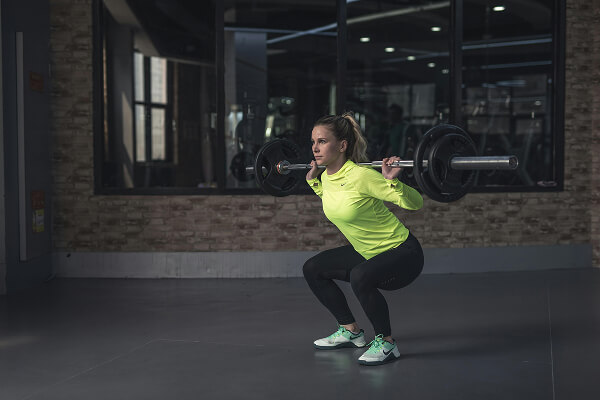
The Squat, Bench Press, and Deadlift, collectively known as "The Big 3," form the undisputed core of strength training. They are multi-joint, compound movements that recruit the maximum amount of muscle mass, making them unparalleled tools for building overall strength, power, and bone density. However, their complexity demands precise execution. Mastering the biomechanics of these lifts is not merely about moving the most weight; it's about minimizing injury risk and maximizing the strength stimulus through flawless technique, safety, and progressive overload.
The squat is a foundational movement for human motion, recruiting the quadriceps, hamstrings, glutes, and lower back.
Biomechanics & Technique:
The Descent: Initiate the movement by simultaneously pushing your hips back and bending your knees. Maintain a vertical bar path over the mid-foot. Your chest should remain tall, and your back straight (neutral spine).
Depth: Aim to break parallel—where the crease of the hip is lower than the top of the knee. This ensures maximum glute and hamstring recruitment.
Knee Position: Push your knees out, tracking them in line with your feet. This engages the hips and prevents knee collapse, which is a major injury risk.
The Ascent: Drive up through the heels and mid-foot, leading with the chest and hips simultaneously, maintaining the core tension established in the descent.
Safety: Always use a safety rack. Never allow your back to round (lumbar flexion) under load.
The bench press is the ultimate test of upper body pushing strength, engaging the pectorals, deltoids (shoulders), and triceps.
Biomechanics & Technique:
The Setup (The Arch): Create a stable base by retracting and depressing your shoulder blades (pulling them back and down). This provides a solid shelf to press from and protects the shoulder joint. A slight natural arch in the lower back is encouraged for leverage and stability.
Grip & Lift-Off: Grip the bar slightly wider than shoulder-width. Pull the bar out of the rack, rather than pushing it, ensuring the shoulders remain tight.
The Descent: Lower the bar under control to the mid-chest/sternum, maintaining elbow tuck (about 45-75 degrees from the body). The descent should be controlled, taking 1–2 seconds.
The Press: Drive the bar straight up and slightly back over the shoulder joint, actively pushing your feet into the floor to generate leg drive.
Safety: Always lift with a spotter, especially when pushing your maximal weight.
The deadlift is arguably the most functional lift, working nearly every muscle group, particularly the posterior chain (hamstrings, glutes, back extensors, traps).
Biomechanics & Technique (Conventional):
The Setup: Stand with the bar over the middle of your foot. Hinge at the hips, keeping a neutral spine (no rounding). Grip the bar just outside your knees.
The Pull: Take the slack out of the bar, then drive your feet through the floor, maintaining the chest-up position. Your hips and shoulders should rise at the same rate.
The Lockout: Finish the movement by squeezing the glutes and standing tall, without hyperextending (leaning back) the back.
The Descent: Lower the bar by pushing the hips back first, controlling the weight down the same path it came up.
Safety: The primary safety concern is a rounded back. Keep the core engaged and the spine neutral throughout the entire lift. Use a mixed grip (one palm forward, one back) or straps for heavy attempts to maintain grip integrity.
Mastery of The Big 3 relies on progressive overload. Once proper form is established with lighter weight, systematically increase the load, volume, or density to stimulate continuous strength gains. Prioritize technique over weight in every session; perfect practice makes perfect performance.
Our premium fitness content is currently unavailable for your connection in your current location.
See supported regions and mobile carriers for more information or when we plan to expand our service. Cost may apply.
Good news: You can still enjoy our trial content while we work on expanding!