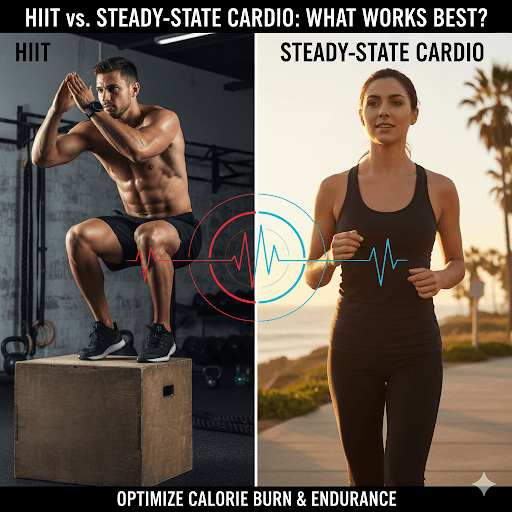
The debate over the optimal form of cardiovascular exercise often pits the quick, intense bursts of High-Intensity Interval Training (HIIT) against the sustained, rhythmic pace of Steady-State Cardio (SSC). Both methods are effective tools for fitness, but their physiological mechanisms, benefits, and applications differ dramatically. Understanding these differences is key to training efficiently for your specific goals, whether they be maximized calorie burn or enduring stamina.
HIIT involves short periods of maximal or near-maximal effort, followed by brief recovery periods. A sample workout might be 30 seconds of sprinting followed by 60 seconds of walking, repeated 8–10 times.
Benefits:
Time Efficiency: HIIT sessions are typically much shorter (10–30 minutes), ideal for busy schedules.
EPOC (Afterburn Effect): The extreme intensity causes a significant Excess Post-exercise Oxygen Consumption, meaning your body continues to burn calories at an elevated rate for hours after the workout is complete, maximizing fat loss.
Improved Insulin Sensitivity: Research suggests HIIT is highly effective at improving the body's response to insulin.
Drawbacks:
High Impact/Stress: The intensity places significant stress on the joints and nervous system, requiring longer recovery and making it unsuitable for daily use.
Not for Beginners: Requires a baseline level of fitness and is harder to sustain with poor technique.
When to Use It: For maximizing fat loss, improving anaerobic conditioning, and when time is limited. Intensity should push you to 85–95% of your maximum heart rate during work periods.
SSC involves maintaining a consistent, moderate effort for an extended duration, typically 30–60 minutes. Examples include jogging, cycling, or using an elliptical machine at a constant pace.
Benefits:
Endurance Foundation: SSC is the superior method for building cardiovascular endurance and improving the body's ability to efficiently use fat as fuel (a process called fat oxidation).
Low Impact/Stress: Generally easier on the joints and central nervous system, making it suitable for longer durations and more frequent training.
Stress Reduction: The meditative, rhythmic nature of SSC can be an excellent tool for psychological stress management and recovery.
Drawbacks:
Time Commitment: Requires a longer duration to achieve significant energy expenditure.
Adaptation: The body adapts quickly to a steady pace, potentially leading to plateauing results if intensity or duration is not varied.
When to Use It: For building an aerobic base, recovery days, improving long-distance running or cycling capacity, and for those with orthopedic limitations. Intensity should be moderate (60–75% of maximum heart rate), allowing you to maintain a conversation.
The consensus among fitness experts is that the most effective training plan integrates both methods.
A smart weekly schedule might look like this:
2–3 sessions of HIIT: Maximizing calorie burn and anaerobic power.
1–2 sessions of SSC: Building an essential aerobic base and aiding active recovery.
Tracking Tips: Use a heart rate monitor (or a wearable device) to ensure you are hitting the correct intensity zones. For HIIT, focus on the quality of the effort during the work interval; for SSC, focus on maintaining consistency and duration.
Ultimately, the best cardio method is the one you can perform consistently and safely, but by strategically employing both the explosive power of HIIT and the sustained foundation of SSC, you can optimize both calorie burn and true endurance.
Our premium fitness content is currently unavailable for your connection in your current location.
See supported regions and mobile carriers for more information or when we plan to expand our service. Cost may apply.
Good news: You can still enjoy our trial content while we work on expanding!